CPT Guide
December 13, 2025 · 4 min read
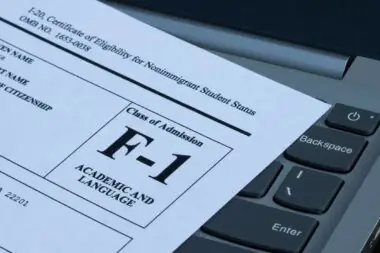
CPT Guide – Complete 2025 Curricular Practical Training Rules for F-1 Students
Updated for 2025. This comprehensive guide explains Curricular Practical Training (CPT) for F-1 students, including eligibility, part-time vs full-time CPT, internships, Day 1 CPT risks, and how CPT affects OPT.
Curricular Practical Training (CPT) allows F-1 international students to work legally in the U.S. before graduation when the employment is an integral part of their academic program.
CPT is one of the most misunderstood F-1 benefits. When used correctly, it enables internships, co-ops, and required work experiences. When used incorrectly, it can permanently eliminate OPT eligibility or trigger future visa scrutiny.
This guide explains CPT clearly. Including the questions students are most afraid to ask.
Table of Contents
- What Is CPT?
- CPT Eligibility Requirements
- Part-Time vs Full-Time CPT
- Do You Need a Job Offer for CPT?
- Academic Requirements for CPT
- CPT Application Timeline
- Day 1 CPT Explained (Risks & Reality)
- Internships, Co-ops & CPT
- Multiple CPT Employers
- How CPT Affects OPT
- Travel While on CPT
- Common CPT Mistakes
- CPT vs OPT vs STEM OPT Strategy
- CPT FAQ
1. What Is CPT?
Curricular Practical Training (CPT) is temporary employment authorization that allows F-1 students to work off-campus when the work is integral to the curriculum.
Unlike OPT, CPT is authorized by the school’s Designated School Official (DSO), not USCIS. There is no separate work permit card.
2. CPT Eligibility Requirements
- You must be in valid F-1 status
- You must have completed at least one academic year (unless program requires earlier)
- The work must be directly related to your major
- The work must be required or credit-bearing
- Your DSO must authorize CPT on your I-20
3. Part-Time vs Full-Time CPT
Part-Time CPT
Defined as 20 hours per week or less during the academic term. Part-time CPT does not affect OPT eligibility.
Full-Time CPT
Defined as more than 20 hours per week. Accumulating 12 months or more of full-time CPT eliminates OPT eligibility.
Critical: Many students lose OPT unintentionally by stacking full-time CPT over multiple terms.
4. Do You Need a Job Offer for CPT?
Yes. CPT requires a specific job offer before authorization. Your I-20 will list:
- Employer name
- Work location
- Start and end dates
Working outside these parameters is unauthorized employment.
5. Academic Requirements for CPT
CPT must be tied to an academic requirement, such as:
- Required internship or practicum
- Co-op program
- Credit-bearing internship course
Simply “wanting experience” is not sufficient under F-1 regulations.
6. CPT Application Timeline
CPT authorization timelines vary by school, but generally:
- Apply 2–4 weeks before intended start date
- Receive updated I-20 before working
- No retroactive CPT allowed
7. Day 1 CPT Explained (Risks & Reality)
“Day 1 CPT” refers to programs that allow CPT authorization in the first semester. While not illegal per se, it is heavily scrutinized by USCIS.
Risk: Extensive Day 1 CPT usage can trigger H-1B or green card RFEs later.
Students considering Day 1 CPT should understand long-term consequences.
8. Internships, Co-ops & CPT
CPT is commonly used for:
- Summer internships
- Fall/spring co-ops
- Required experiential learning
Each CPT authorization is employer-specific and term-specific.
9. Multiple CPT Employers
Some schools allow multiple CPT employers if:
- Each role is approved separately
- Total hours are within authorized limits
10. How CPT Affects OPT
Key rule:
- 12+ months of full-time CPT → OPT forfeited
- Part-time CPT → no impact on OPT
11. Travel While on CPT
Travel is allowed with:
- Valid F-1 visa
- CPT-authorized I-20
- Proof of enrollment
12. Common CPT Mistakes
- Working before CPT approval
- Exceeding authorized dates or hours
- Assuming CPT is “automatic”
- Using CPT for non-academic roles
13. CPT vs OPT vs STEM OPT Strategy
CPT is best used strategically for internships and required experience, while preserving OPT and STEM OPT for post-graduation work.
14. CPT FAQ
Is CPT considered sponsorship?
No. CPT is authorized by the school, not the employer.
Can I work full-time on CPT?
Yes, but 12 months of full-time CPT removes OPT eligibility.
Can unpaid internships use CPT?
Yes, if the role is credit-bearing and approved.